


So try explaining freemium to someone who’s never heard of it.
You build a thing. A whole thing. Then you give away part of it. The worst part. On purpose. And you hope that the people using the worst part of your thing will eventually want the better parts badly enough to pay you. This is the foundation of a trillion-dollar industry.
It sounds insane when you say it out loud but it worked for a really long time because of one specific asymmetry: the company knew how to build the thing and you didn’t. The free tier existed in the gap between your need and your ability. You could use a constrained version but you couldn’t really make your own version, so the constraint was real, and the funnel worked.
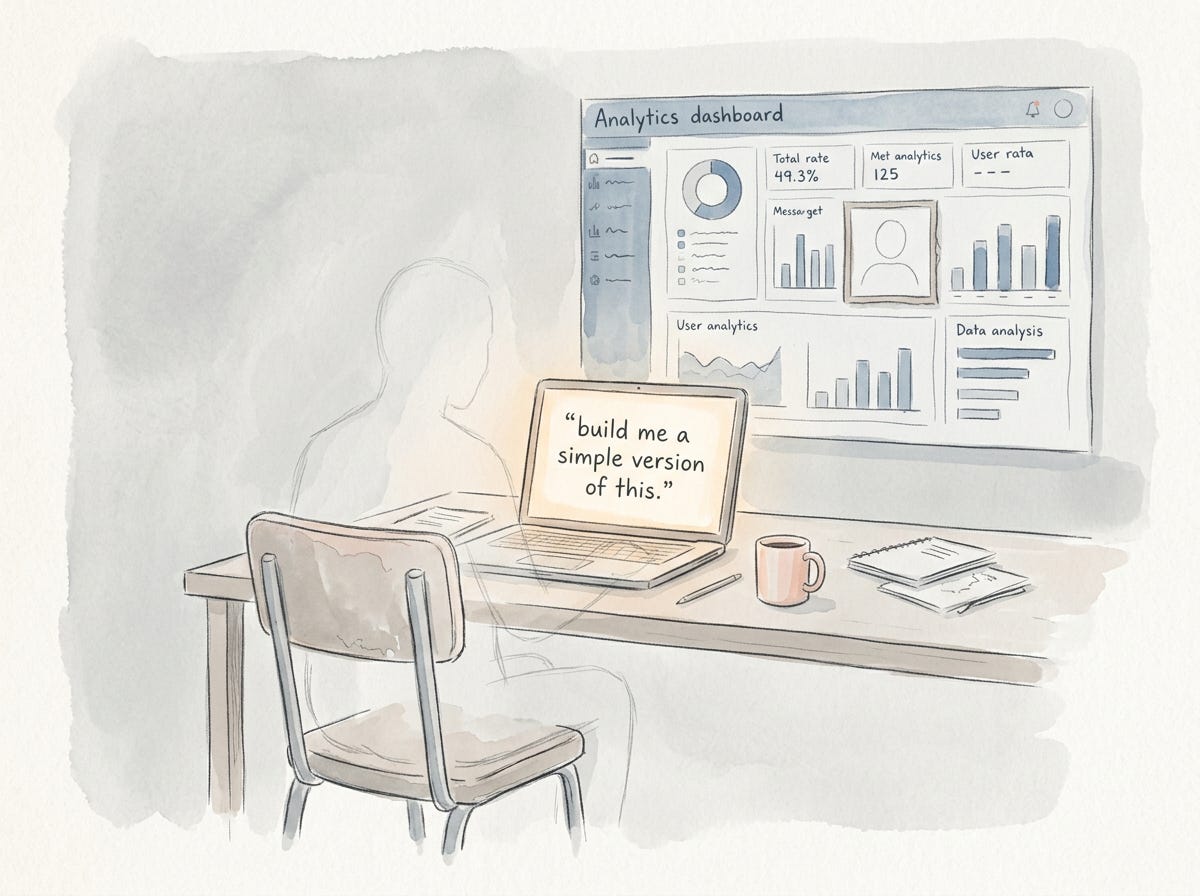
I think that asymmetry might be collapsing. One prompt at a time.
Goodbye Freemium
I wrote a post last week and mentioned I’d built my own error tracker. The short version is that I needed basic error tracking for an app I was building, and instead of signing up for a free tier somewhere, I asked Claude to build me a minimal version. Twenty minutes later it worked. Fifty lines of code. Deeply specific to my setup. Not as good as a real error tracking service. But good enough.
The SaaS company I didn’t sign up for will never know I existed. I’m not a lost customer or a churned user or a lead that didn’t convert. I’m a ghost. Someone who would have been in their funnel in a world where building my own version took any amount of effort whatsoever.
How many of us do you think are out there now? How many more will there be tomorrow?
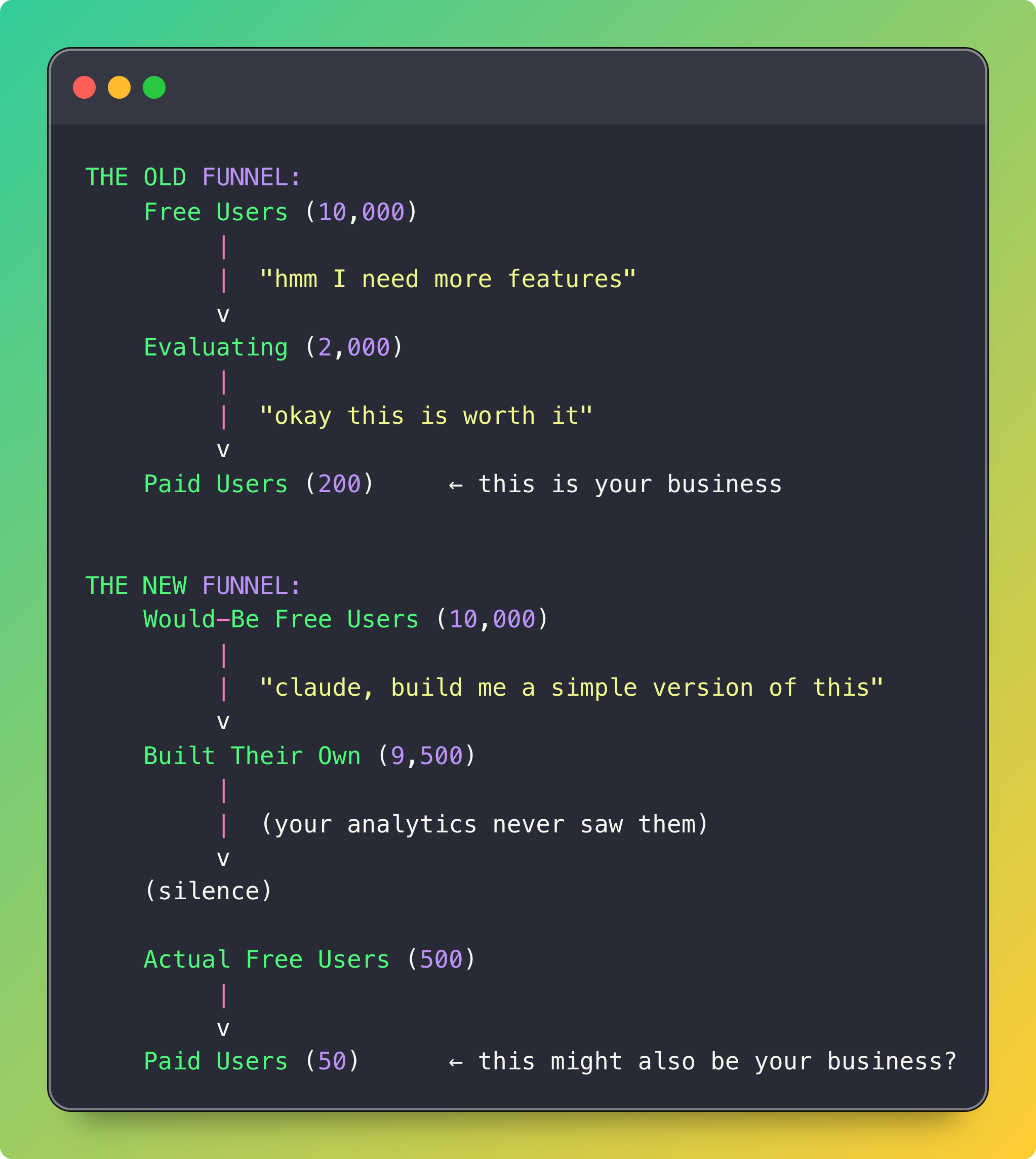
The free tier was supposed to be the hook. The part that makes you want more. But what happens when the hook is something anyone can replicate with a prompt?
When The Bet Stops Working
Freemium was always a bet about asymmetry. You know things the user doesn’t. You’ve spent years accumulating edge cases, building integrations, handling the weird stuff that only shows up at scale. The free tier was your way of saying “look how useful this is” and the constraint was your way of saying “imagine how much more useful it could be!”
They don’t even need to clone your product most of the time now. Just the shape of your free tier. The 60% version. The part that was supposed to be the top of your funnel.
The free tier has moved beyond competing with your competitor’s free tiers. It’s now competing with your potential customer’s ability to just build the thing.
And the prompt doesn’t have a conversion funnel.
So What Do You Give Away Now?
Now look I don’t have a clean answer. (I know I keep writing posts where the conclusion is ‘I don’t know.’ Well if I had a clean answer I’d probably be selling it as a SaaS product and you people would be out there prompting your way out of needing it. So here we are.)
But I’m starting to get a hunch. And the hunch is: skills.
No more constrained product, or open source library, or free tier that exists to make you want the paid tier. Something else. Something that teaches the person how to think about the problem domain in the way you think about it, that lives in the tools they’re already using, and that gets more valuable the more they use it.
I’ve noticed two people doing this already (I’m sure there are a ton more, these are just the ones I’ve started using this week.) and I think they’re onto something.
The Skill Suite as Lead Gen
Think about taxes for a second. There’s a whole spectrum of how you can get your taxes done. You can do them yourself with a pen and the IRS forms. You can pay for TurboTax, which walks you through it and knows the rules so you don’t have to. You can pay an accountant at H&R Block to use TurboTax for you or whatever they use. Or you can go fully bespoke and find a tax strategist who understands your specific situation and builds a custom approach.
Most people don’t need the bespoke option. Most people need TurboTax. And what a skill suite does is essentially turn your AI agent into TurboTax for your domain. It makes an AI that gives you generic pen-and-IRS-forms-level advice and upgrades it to guided, opinionated, been-there-done-that expertise.
Corey Haines built Marketing Skills which are 30+ skills for Claude Code and other AI coding agents, covering conversion optimization, copywriting, SEO, growth engineering. Tons of stars on GitHub. You install them and suddenly your AI agent knows how to think about marketing the way Corey thinks about marketing.
Then there’s Paul Bakaus’s Impeccable, a design vocabulary skill that gives your AI agent the ability to talk about visual design the way a designer would. Typography choices, spacing systems, color relationships. The things that make a UI feel polished instead of just functional.
Ethan Mollick wrote about something an eternity ago he calls the Best Available Human standard the idea that AI doesn’t have to be better than the best expert, it just has to be better than the help you’d have access to or actually get in your specific situation. That’s what Corey and Paul are doing with these skill suites. Without them, you get generic Claude. With them, you get Claude operating at the level of someone who’s spent years doing conversion optimization or design systems work. The skills raise the floor. Your best available human just got a lot better.
Both of these are free. Both of them are lead generation for their creators’ actual businesses. And what’s different from this being a free tier is that there’s no point in trying to prompt your way out of needing them.
(Again, these are just the two that I’ve found recently and found useful. I’m sure there are many many more out there. Also I’m now realizing as I’m writing this section I am literally doing Corey and Paul’s marketing for them. In a blog post about how skills are better lead gen than free tiers. So... I guess it’s working? Which is either evidence for my thesis or evidence that I’m a rube. This is not a paid post, I promise.)
You can’t say “Claude, build me a version of Corey’s marketing expertise.” Well, you can say it, but you’ll get something a little more generic instead of the specific, opinionated, hard-won expertise that comes from doing the work for real companies and then iterating on the prompts. The skill files contain that accumulated understanding. (Plus they’re MIT or Apache2.0 licensed. You don’t even need to get Claude to make you a version. GitHub has the fork button right there.)
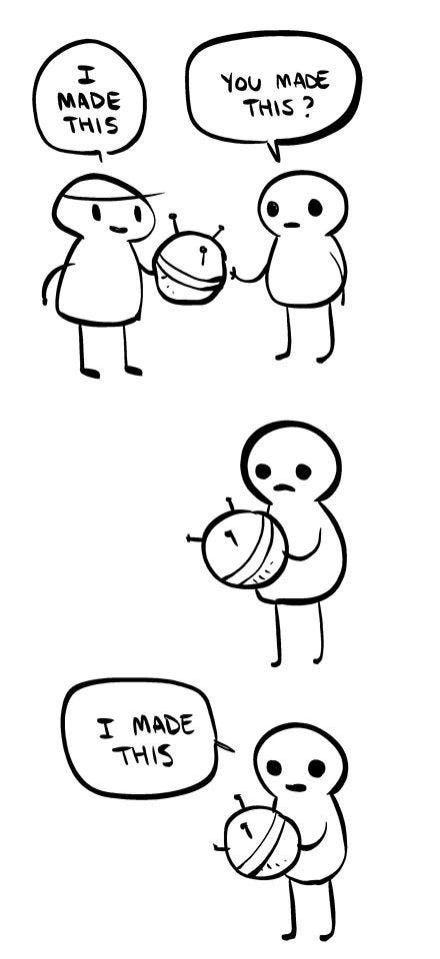
But seriously, does that sound familiar? That’s the moat.
Except now, instead of hiding the moat behind a free tier and hoping people convert, you’re giving away the moat directly and betting that the people who use it will want more. Different bet. Same basic insight about where the real value lives.
A Different Kind of Fork
So I’ve decided to try this out and work on my own take on all of this based on what we talked about last week. It’s called WOMM Skills and its a set of skills for the process I use of building software with AI. How to go from idea to design doc to epic breakdown to implementation to capturing what you learned.
But the interesting thing about WOMM Skills is that they’re designed to change.
Most of the other skills I’ve found out there can be great, but they’re static. The knowledge they contain is fixed after install. WOMM Skills ships with meta-skills that grow the knowledge base.
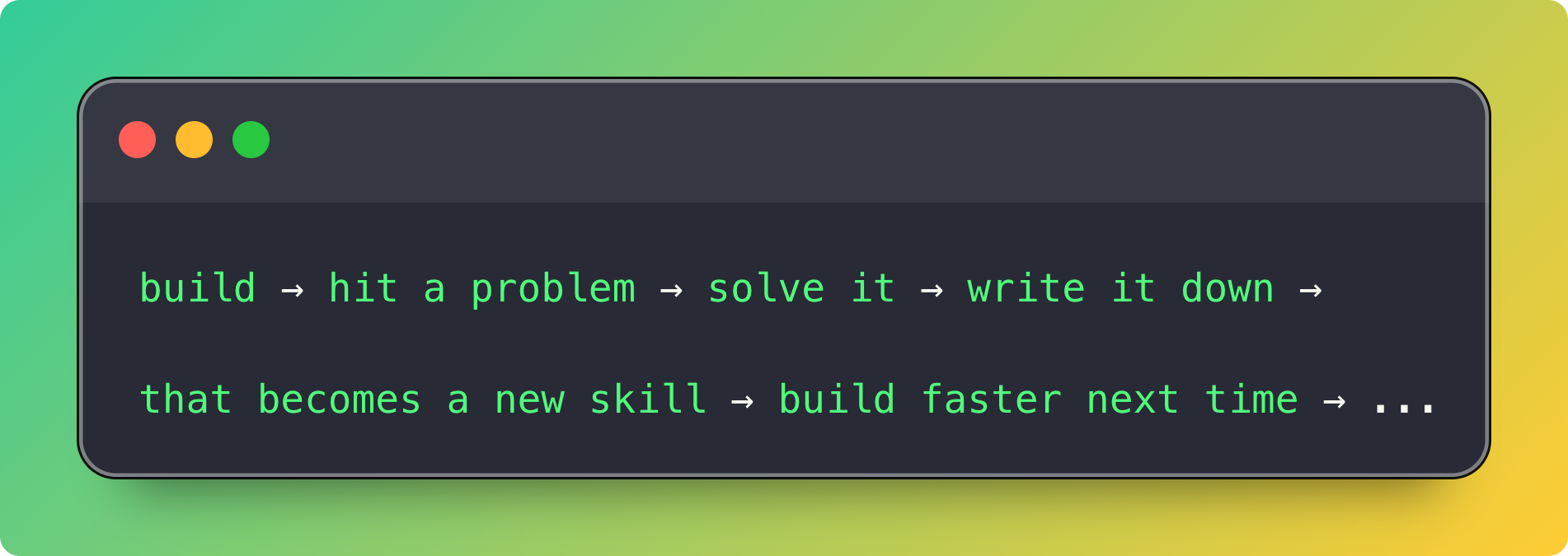
The whole thing is designed to be forked, but I don’t think I’ll really be accepting any PRs. At all. If you want something added, fork it and have your Claude add it. That’s the whole contribution model. That might come off as antisocial but I mean it in the completely opposite way. I want to hear about what you built, I just don’t want to be a bottleneck for whether you can build it.
Last week I wrote about why I think forking is the new default mode of collaboration, and these skills are my attempt to explore what that might look like. A handful of skills for building with AI and building up a knowledge base for future projects. Every fork should diverge pretty quickly. That’s expected and intended.
It also comes with some ideas for community skills to close the forking loop. Ways to showcase what you’ve built on the site, feed your golden specs back to other forks to repurpose, even skills for looking at the base repo and selectively pulling in changes you want without overwriting your customizations. Think git pull with Claude Code Psychosis. Browsing what changed upstream and choosing what to to have your Claude adapt for your setup.
If that sounds interesting, check out the site or the repo. Fork it. Change it however you’d like. It’s all just a prompt or two away.
The Honest Business Model
Maybe freemium becomes something else entirely. Maybe instead of a constrained free tier, you publish some skills now. “Here’s how we think about this problem domain. It’ll get you 60% of the way there. When you need the other 40%, the reliability, the scale, the integrations, the years of edge cases we’ve discovered and handled? We’re here.”
That’s a weird business model. Kind of like merging info products and freemium I guess? But I think it’s at least an honest one? You’re basically saying: the code isn’t the moat. The code was never the moat. The moat is the accumulated understanding of what goes wrong, and we’re giving you as much of that as we can package into a skill file. The rest, you’ll need us for. Or maybe you won’t. Maybe you just keep customizing the skills and growing your own expertise and never convert and that’s fine because at least you’re out there using the tools and talking about the domain and writing newsletter posts about the free skills you found that act as the best available human for you. And isn’t that the best marketing of all?
Or maybe it all goes to zero? I guess we’ll find out!
But the people who are already doing this, shipping skills as lead gen, packaging expertise instead of features, avoiding loss leader free tiers, they seem like they’re building for the world that’s arriving instead of the world that’s leaving.
So maybe the answer is to go to where the ghosts are.
Because the ghosts aren’t coming back to the funnel.
Great piece. I've written about skills as the new distribution channel, but this strikes me as more precise.